


As the S&P 500 continues its relentless climb to new all-time highs, powered by an AI frenzy and massive corporate buybacks, a sense of unease is growing among seasoned observers. Beneath the surface of record valuations lies a confluence of factors—geopolitical tension, political uncertainty, and the pervasive rise of automated trading—that bears a striking and unsettling resemblance to the conditions that precipitated the historic Black Monday crash of 1987. For crypto investors, this connection is critical, as the fate of digital assets like Bitcoin remains tethered to the traditional market’s performance, making preparedness the ultimate strategy.

A Chilling Historical Parallel: 1987 Revisited
The ghost of October 1987 looms large over today’s financial landscape. On Black Monday, the Dow Jones Industrial Average plunged an unprecedented 22.6% in a single day, an event that carved a 34% loss from the market’s value. This wasn’t a random accident but the result of a perfect storm.
The catalysts were a mix of macro events and technological change:
– Geopolitical Spark: A U.S. Navy attack on Iranian oil platforms in the Persian Gulf, dubbed Operation Nimble Archer, escalated tensions and rattled investor confidence.
– The Rise of the Machines: This period marked the early integration of automated trading systems. So-called “portfolio insurance” algorithms, designed to limit losses, instead created a feedback loop of panic selling. As one analyst noted, these machines “chose to dump stocks en masse,” creating a cascade “that no human could stop.”
– Political Backdrop: The event unfolded during the lead-up to the 1988 midterm elections, a time of inherent political uncertainty that markets typically abhor.
The emotional and financial impact was immense, yet from a long-term chart perspective, it became a “blip on the map.” However, the mechanisms that caused it have evolved, not vanished.
The Modern Recipe for Volatility: AI, Elections, and Conflict
Fast forward to today, and the ingredients for a similar volatile event are simmering. The parallels are too significant to ignore, presenting a triple-threat scenario for 2025-2026.
1. The AI Bubble and Supercharged Algorithms
Today’s market is bloated with excitement over artificial intelligence. Companies like Nvidia and Oracle are driving indices higher, often by buying their own products and sharing revenue in a cycle that consolidates power within the S&P 500. The concern isn’t AI itself, but the “AI bubble burst” being forecasted for 2026, coinciding with the moment the market demands proof of real value from these companies.
More critically, our trading systems are now “automated trading on steroids.” Modern AI doesn’t just execute; it predicts and reacts in nanoseconds using vast datasets. The risk is a herd behavior amplified by models all trained on similar, optimistic data. A single glitch or bad data feed could trigger a sell-off, and with AI controlling trillions in assets, the amplification effect could dwarf the 1987 crash.
2. Midterm Election Chaos
History provides a clear warning: the party in power almost always loses seats in midterm elections. With the 2026 elections on the horizon, early polls and historical trends suggest potential for a significant political shift. If control of Congress changes hands, leading to investigations and legislative gridlock, the market—which “absolutely hates uncertainty”—could react violently. This political cycle mirrors the tense environment of the late 1980s.

3. A Brewing Geopolitical Flashpoint
Once again, the focal point is Iran. While there are current attempts at de-escalation, the underlying tensions with Israel and the United States remain. Saber-rattling, military briefings on cyber options, and warnings of strikes create a backdrop eerily similar to the pre-Black Monday environment. Any “overzealous strike” could be the spark that ignites market panic, just as it was nearly four decades ago.
Crypto’s Tether to the Traditional Beast
For the crypto community, this isn’t just a Wall Street problem. As regulatory adoption progresses, the correlation between crypto and traditional markets has become a reality. “Unfortunately for crypto bros, we are tied to how the stock market performs,” the analysis states. A multi-trillion dollar “haircut” to the S&P 500 would undoubtedly send shockwaves through digital asset portfolios.
The question isn’t just what would happen to the S&P, but “My God. God knows what it would do to Bitcoin.” This interconnectedness means that crypto investors must watch the same macro indicators as traditional traders. The key is not to fear a downturn, but to be prepared to leverage it.
Strategy in the Face of Potential Turmoil: Be Prepared, Not Scared
The appropriate stance in this environment is cautious optimism. The goal isn’t to predict doom but to acknowledge risks and have a plan. The primary strategy highlighted is liquidity preparation.
- Hold Dry Powder: Maintaining a position in stablecoins like Tether (USDT) is emphasized as a way to be ready to act.
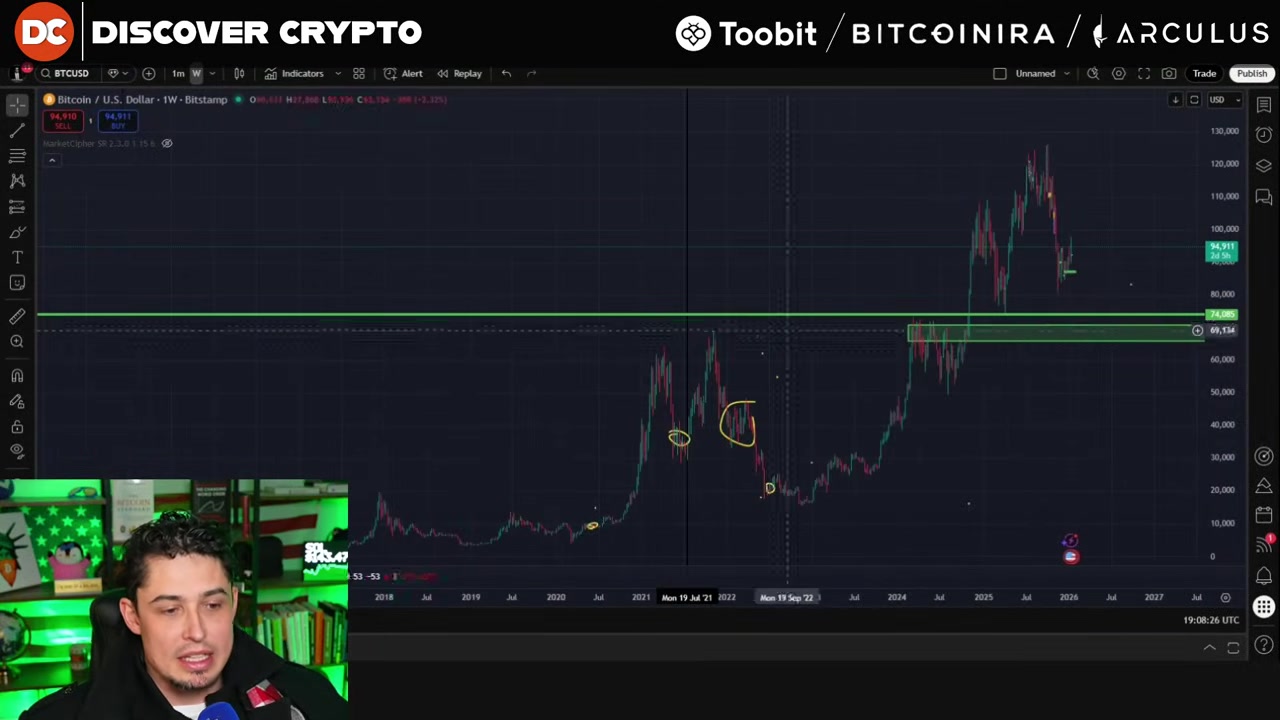
- Identify Opportunity Zones: The analysis eyes a potential “gift from God dip zone” for Bitcoin in the $65,000 to $70,000 region, should a broader market pullback occur.
- Monitor Key Levels: Watching the price to produce Bitcoin at $74,000 is mentioned as a critical technical level.
This approach transforms potential market fear into strategic opportunity. As the content concludes, “only the prepared will be able to take advantage of such an event.” This philosophy of strategic patience applies whether you’re trading blue-chip stocks, Bitcoin, or exploring other avenues in the crypto ecosystem, such as finding the best Play-to-Earn Games to generate assets during both bull and bear markets.
Conclusion: A Wary Eye on the Horizon
The market’s current parabolic rise, driven by AI hype and concentrated buying, is historically unsustainable without a significant correction. When you layer in the advanced, interconnected AI trading systems, the looming U.S. midterm elections, and persistent geopolitical risks, the echo of 1987 grows louder.
For investors in both traditional and digital assets, the mandate is clear: stay informed, manage risk, and maintain liquidity. The future may hold a necessary and aggressive market reset, much like the “blip” of Black Monday. By understanding the parallels to the past and preparing for potential volatility, you can navigate uncertainty not with anxiety, but with a plan to emerge stronger. Remember, in a world of automated herds and political noise, the disciplined, prepared investor holds the real advantage. For those looking to diversify their engagement with crypto beyond trading, consider methods like these Free and Safe Ways to Earn Crypto to build your portfolio steadily, regardless of market conditions.